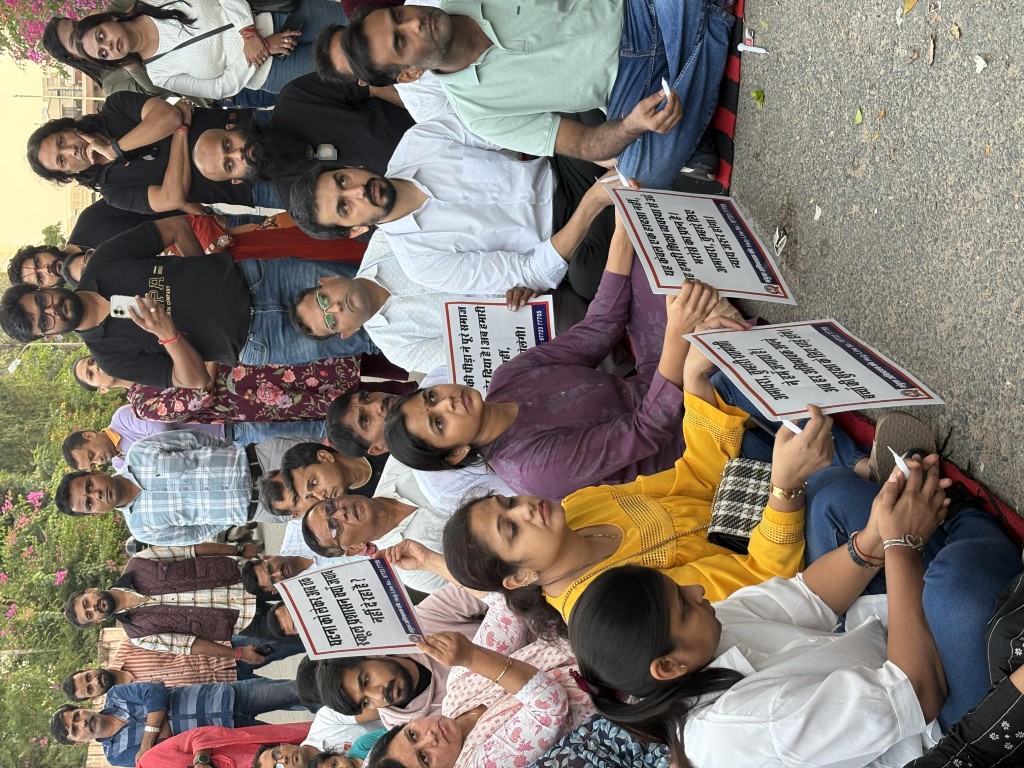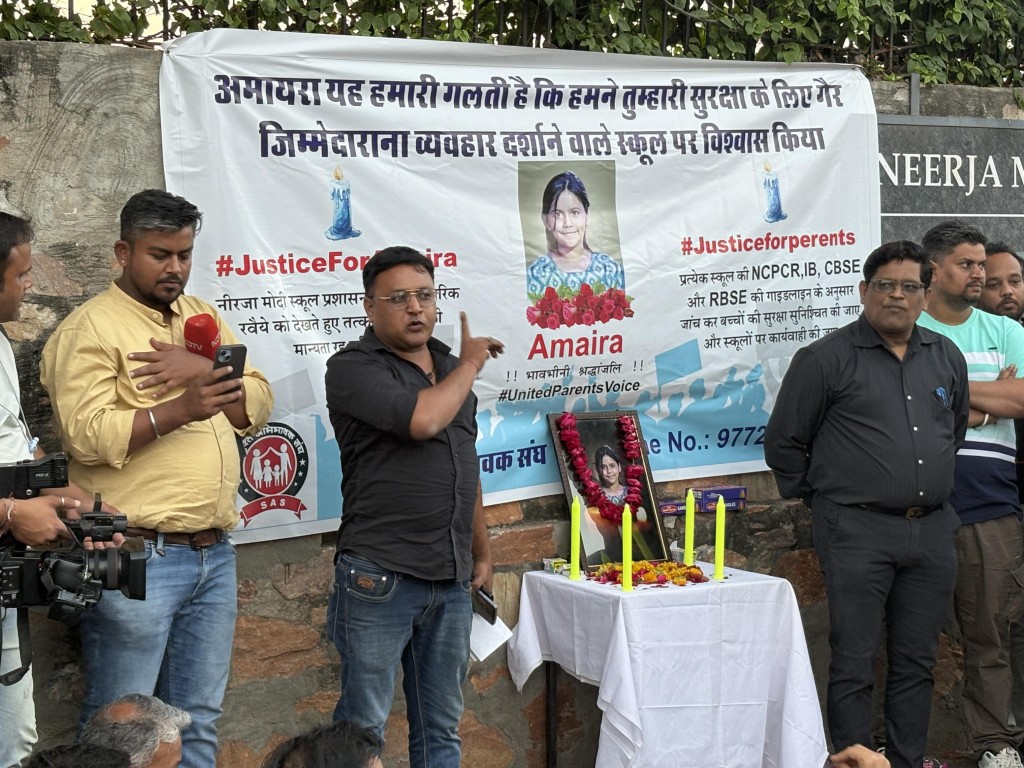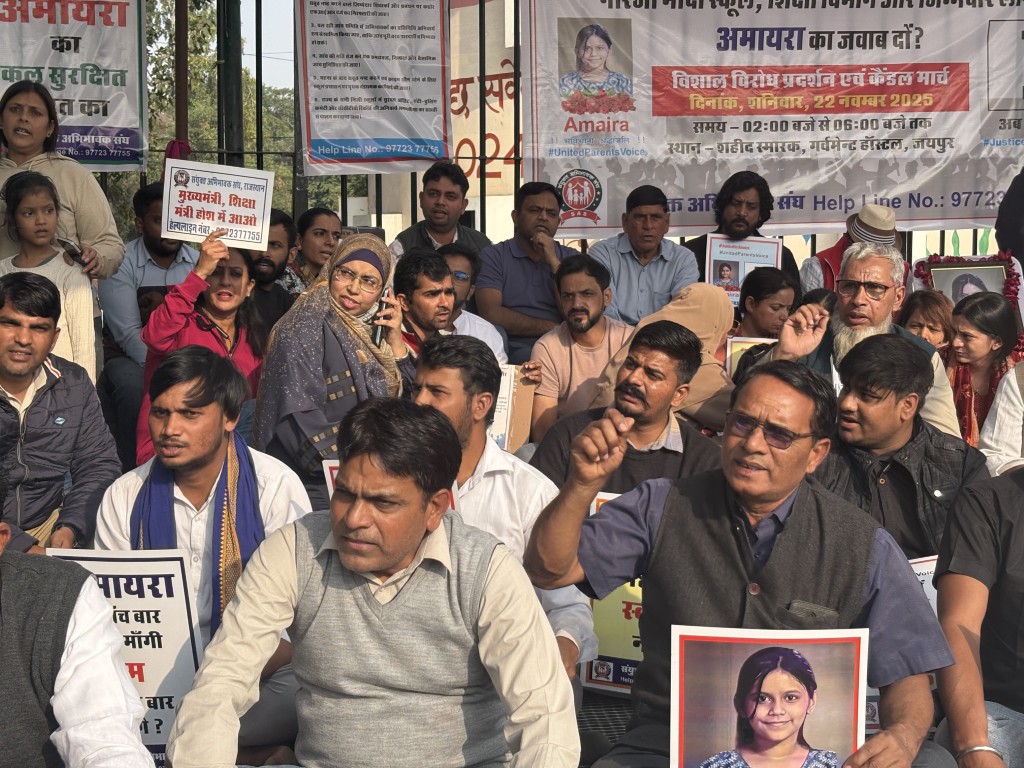
The death of nine-year-old Amaira shook Jaipur and raised disturbing questions about bullying, institutional negligence, and the unequal reach of justice. Evidence of sustained bullying had emerged, complaints had reportedly been made, and yet the school administration failed to act in time.
What followed the tragedy was equally alarming. Allegations surfaced that crucial evidence was destroyed — CCTV footage deleted, forensic traces cleaned, and access restricted. Despite a CBSE inquiry reportedly finding the school at fault, there was prolonged administrative silence at the state level.
Timeline of Action
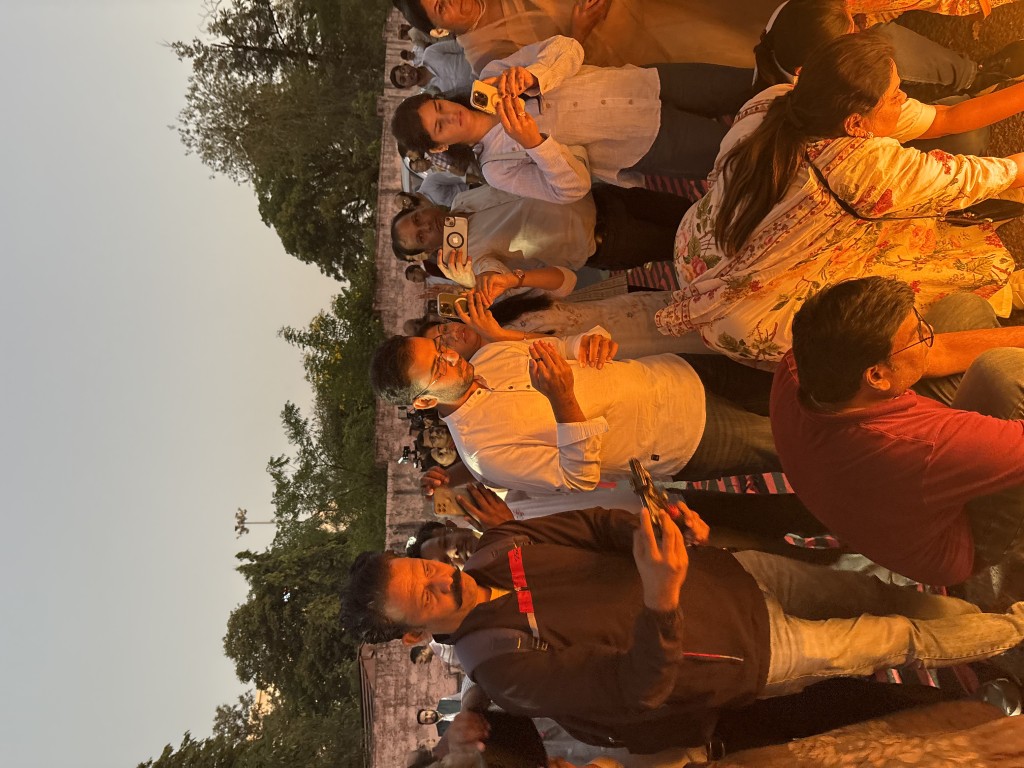
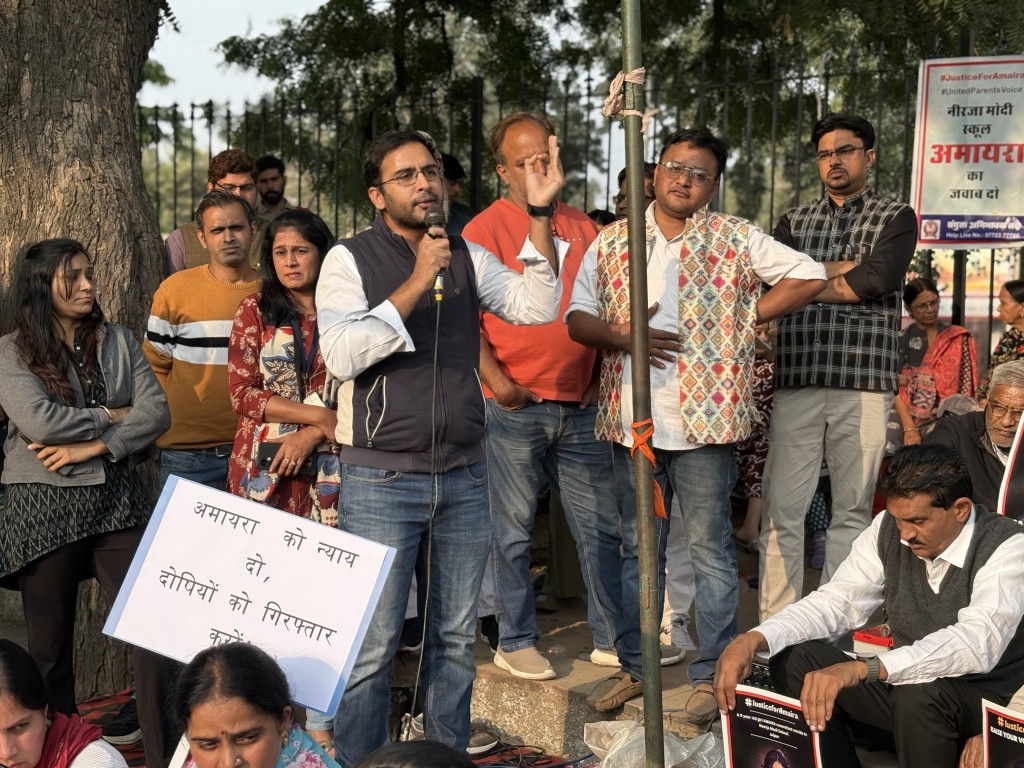
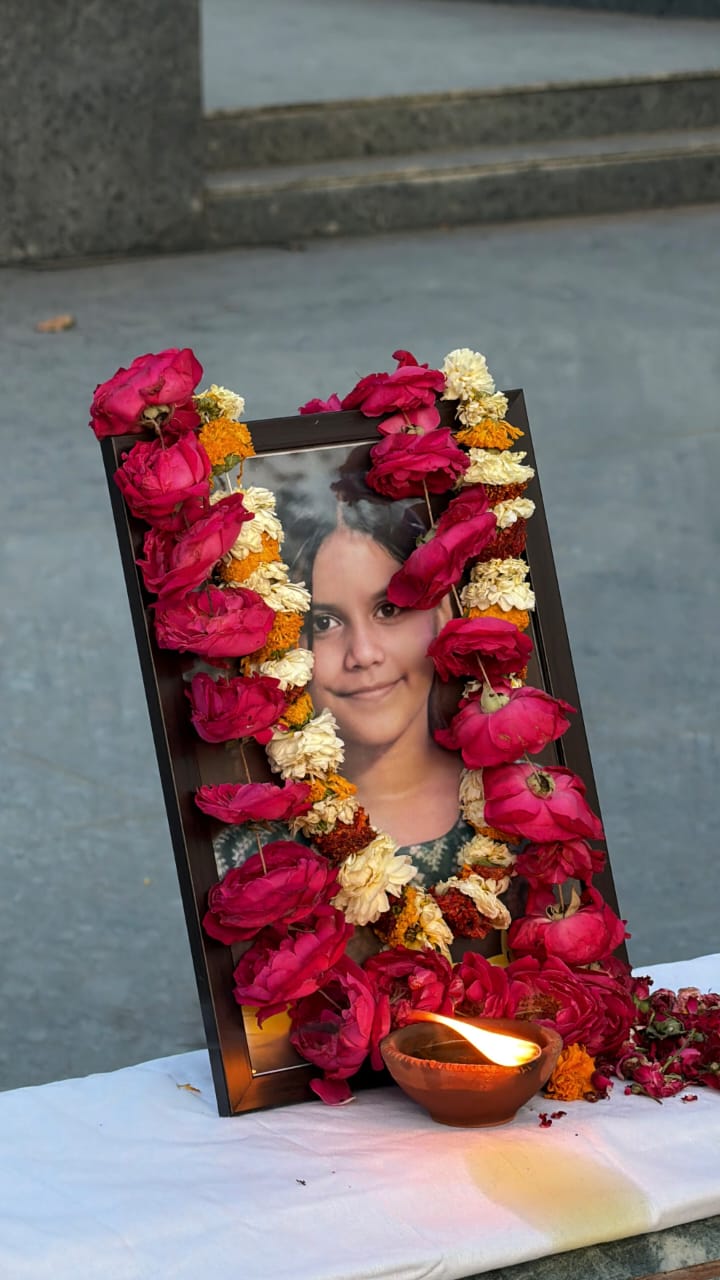
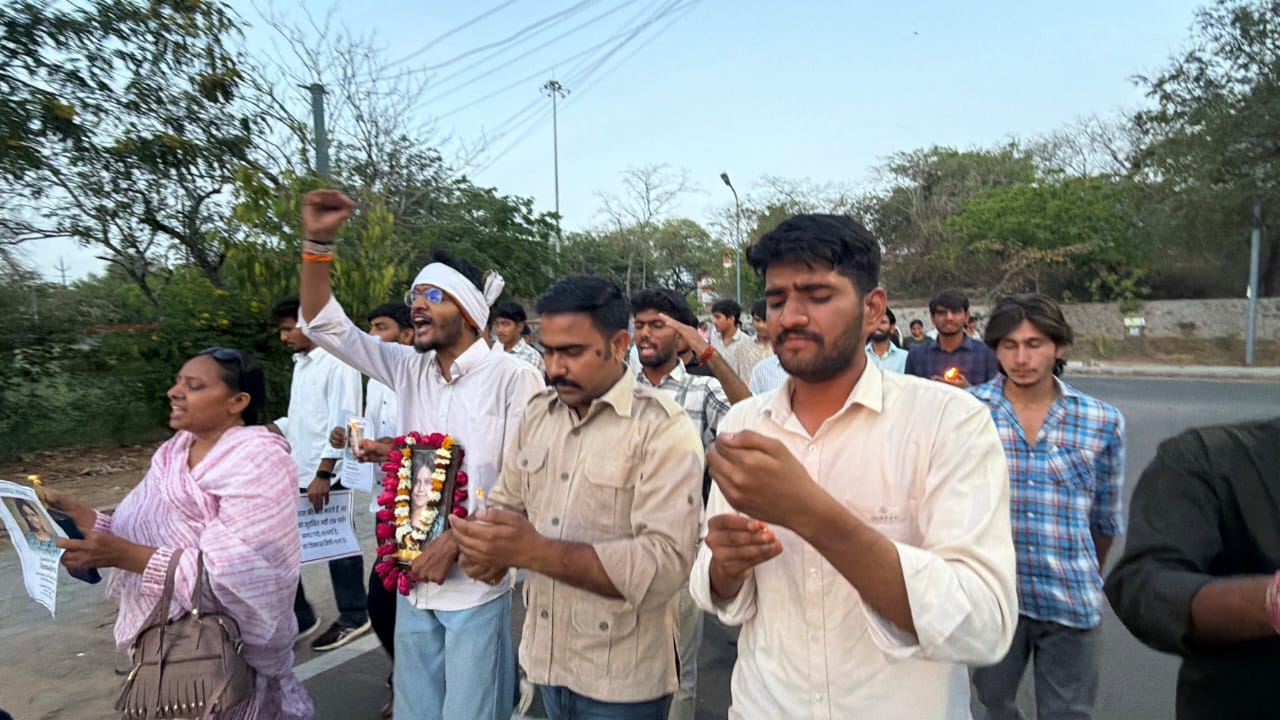
Candle marches and public protests
Filing RTIs and formal representations to authorities
“Laapata Education Minister” posters across Jaipur to highlight political inaction
Media engagement and press conferences involving Amaira’s family
Parent–Teacher public meetings focused on bullying and child safety
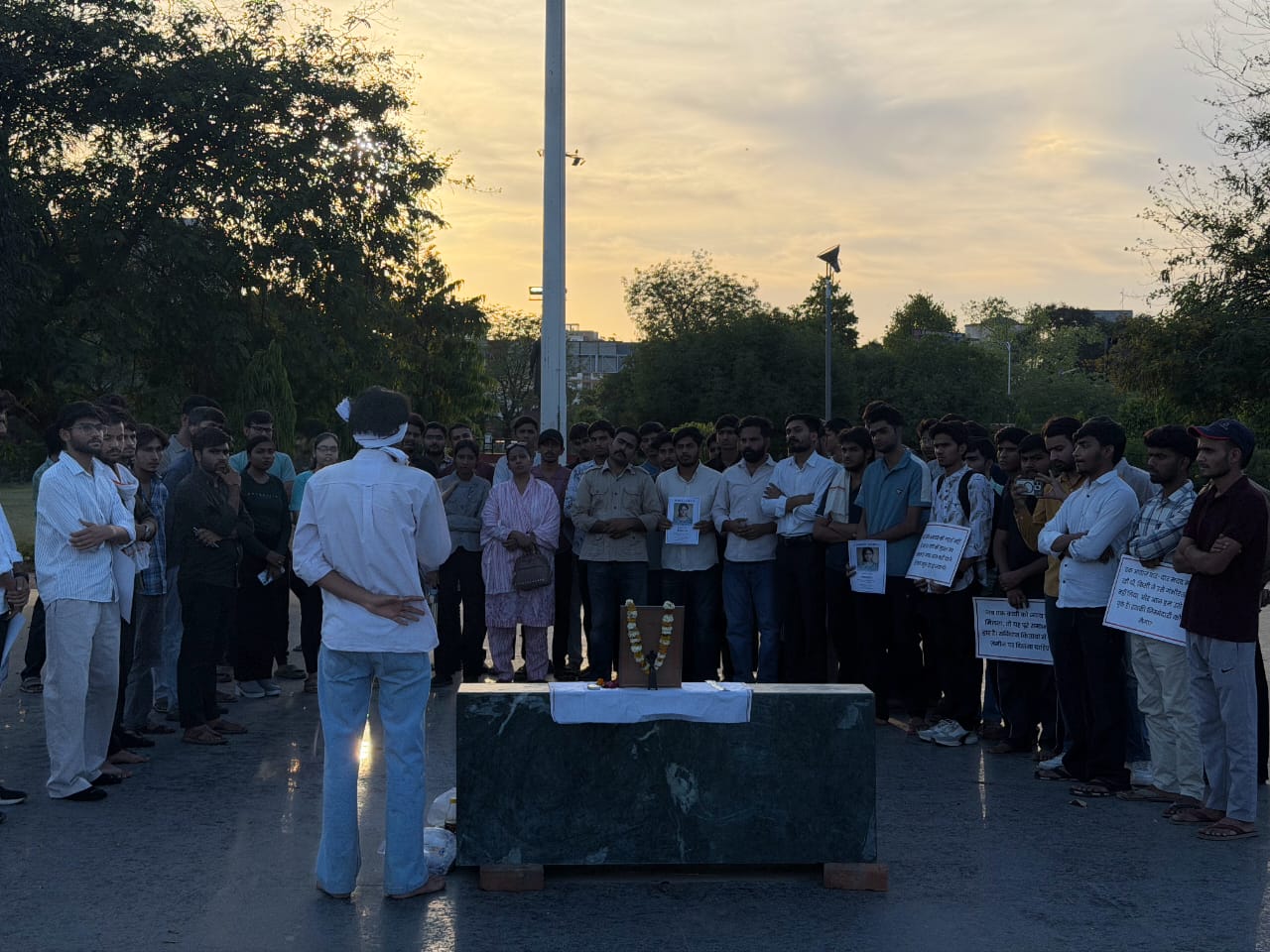
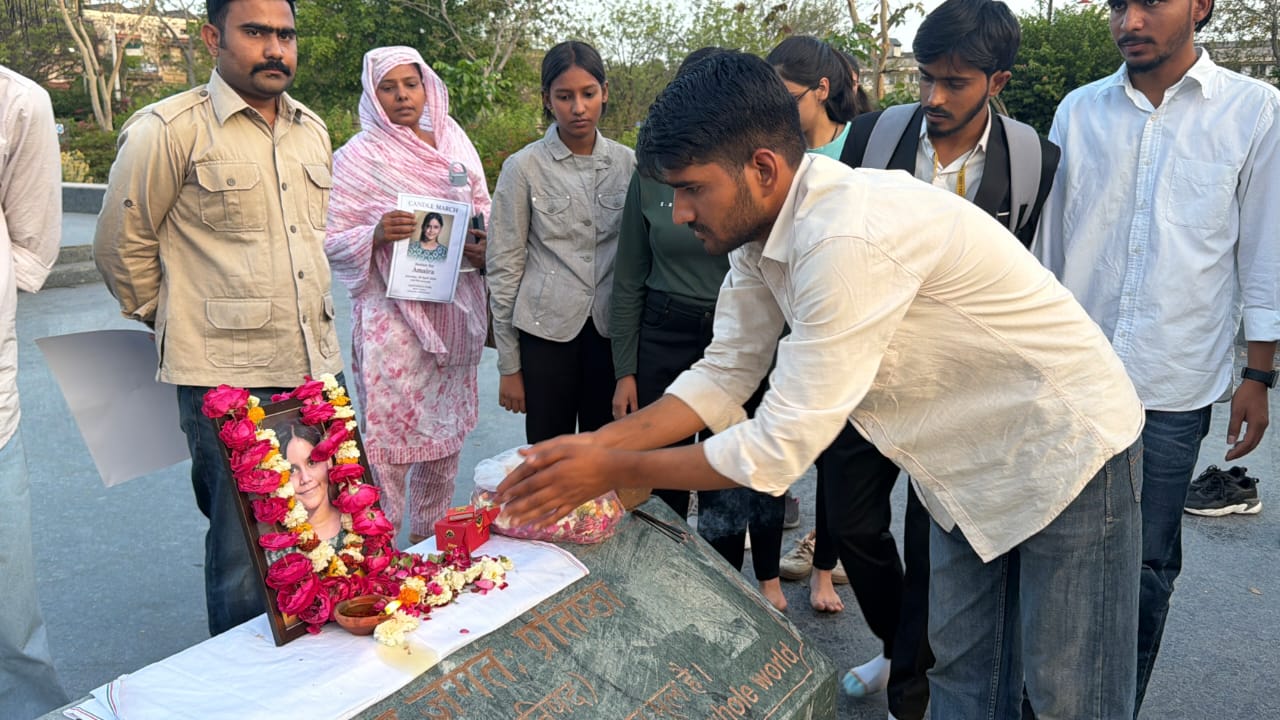
Organising a candle march at Rajasthan University to highlight ongoing delays and government inaction
To raise awareness around the ongoing delays in Amaira's case and question continued government inaction, a candle march was organized at Rajasthan University by Team Parivartan. The march brought together students and citizens, reinforcing that public memory and pressure remain essential in the pursuit of justice.
The Outcome
After continuous public pressure, the movement achieved its first major breakthrough: CBSE cancelled the affiliation of Neerja Modi School, Jaipur, citing serious violations related to student safety, bullying complaints, and post-incident handling.
While this marked a significant victory, the movement has consistently maintained that justice is incomplete without:
• Criminal accountability of the responsible management and staff
• State-level enforcement and follow-through
• Clear safeguards to ensure other students are not academically harmed
The Justice for Amaira movement has become a wider call to confront bullying, mental health neglect, and the unchecked power of elite institutions.
Media Highlights